
Intermission
On the 2-week ceasefire between Iran and Israel/USA, its precariousness, and assessing the situation as it stands right now

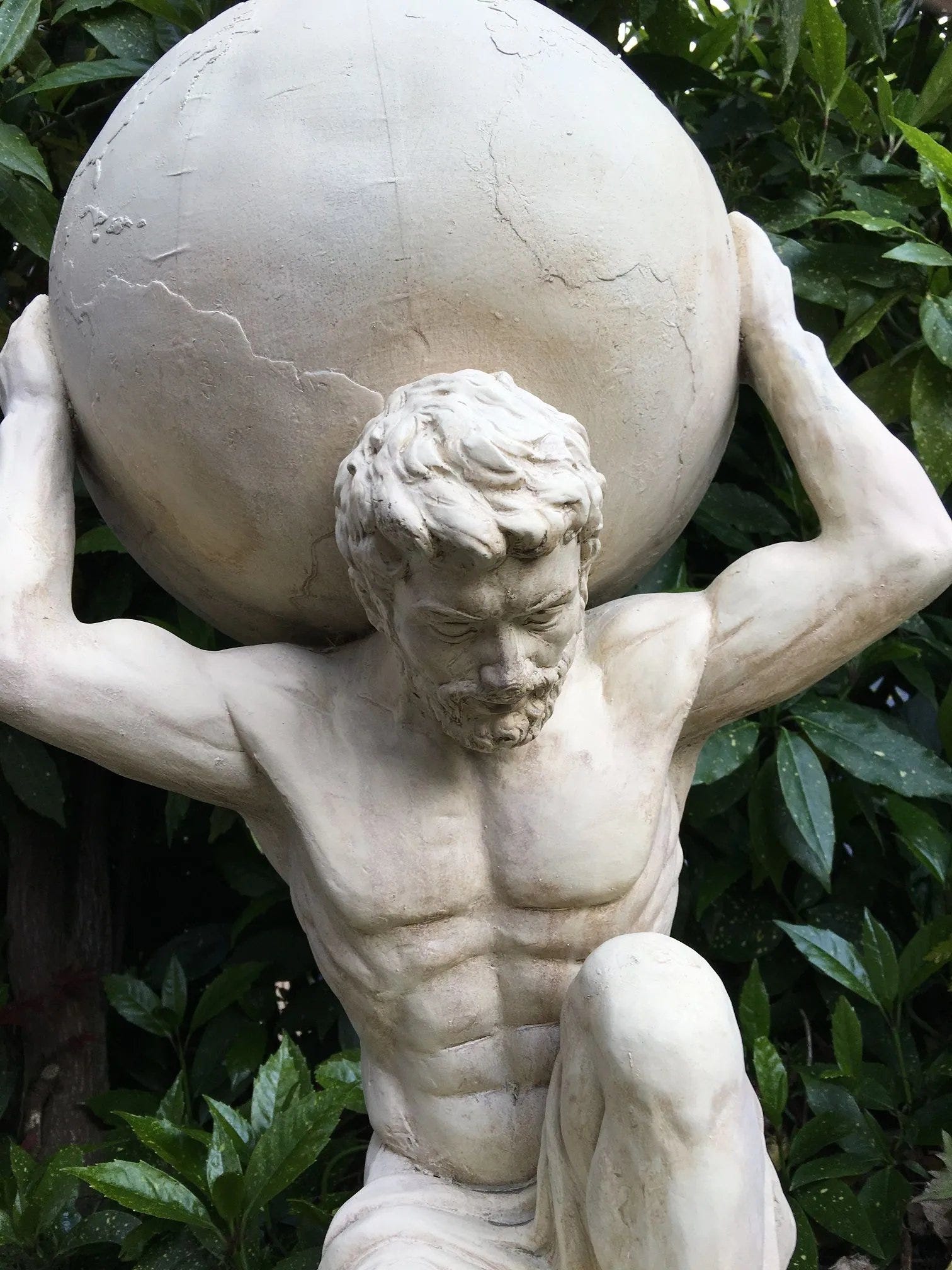
(Image is of Niccolo holding up all the assumptions baked into the ceasefire)
This is the second part of a 2-part series. You can find the first entry here.
Everything that you are about to read in this entry could be rendered null and void by the time you receive this in your email inbox. This is a testament to just how fragile this ceasefire is. As I type this up, Iran has already launched strikes at Israel, the IDF continues to pound Hezbollah in Lebanon, and now it is being reported that the UAE is striking Iranian oil industry assets in the Persian Gulf. Be prepared to toss this entire analysis into the bin.
However, I still feel the need to provide one. As I wrote in a recent essay, this war is an excellent opportunity for the USA to lock down the entire Middle East, a condition that is necessary for it to move onto its main objective: containing and strangling China. Per contemporary internet parlance, this is an actual happening, and happenings have global repercussions. It deserves our full attention.
All of this could blow up in an instant. Keep this in mind the entire time that you are reading this. We are taking a conflict that is happening in real time, freezing it in amber, and trying to figure out what it all means by assuming that this ceasefire actually holds and progresses to serious negotiations beyond this set two-week time frame. We have to assume some linearity, and therein lies the rub.
How We Got To This Point
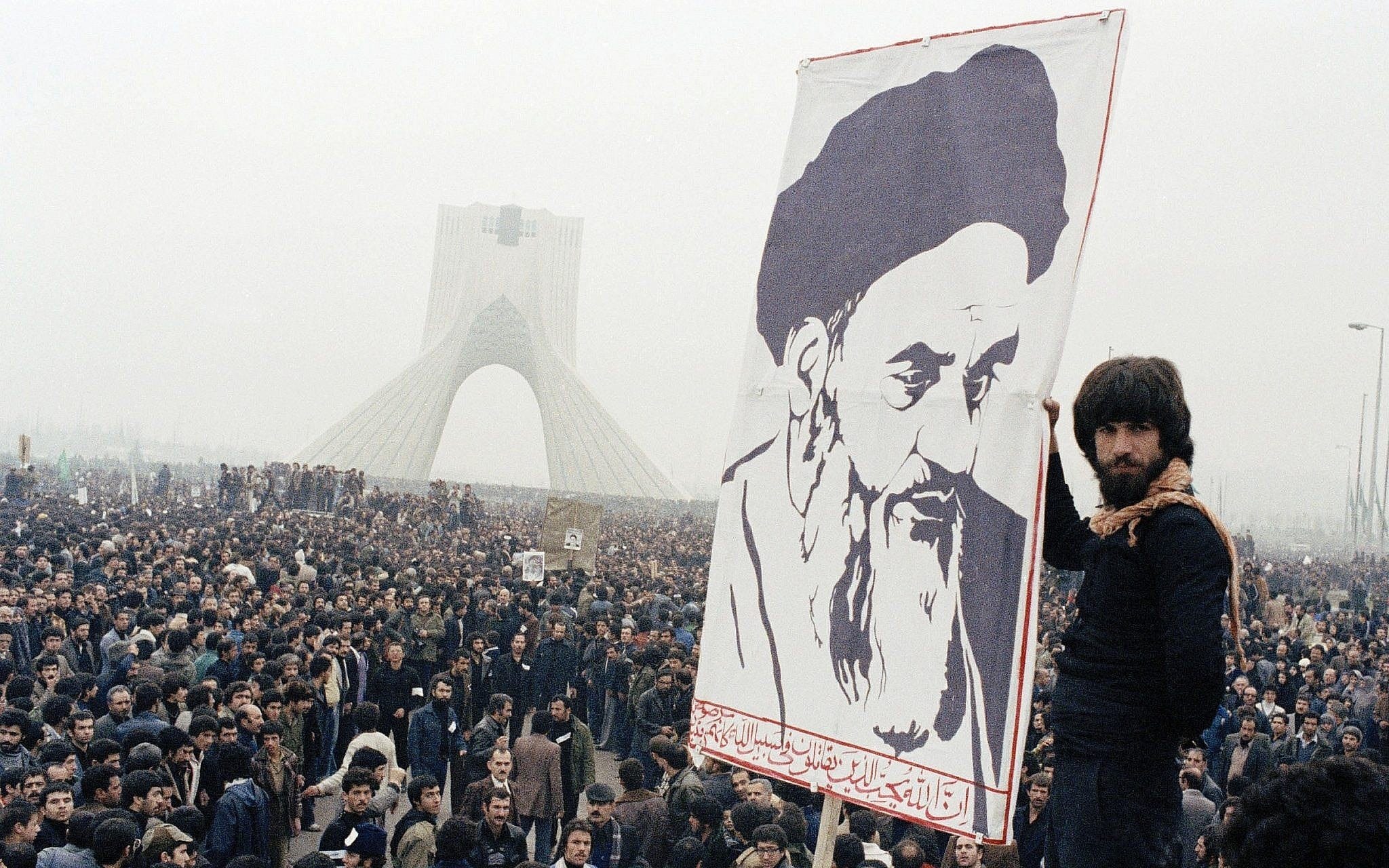
The 1979 Iranian Revolution that saw the Shah of Iran deposed and replaced by a Shi’ite Theocracy was a seminal event in the 20th century. For centuries, the Islamic world was in retreat almost everywhere, and was being pressed by The West as it surged ahead on every conceivable front, especially in terms of technology, economics, and warfare. For the first time in generations, Islam experienced a political surge that not only managed to capture one of the most important countries in the Muslim world, but it had the added effect of thoroughly embarrassing the West. Honour was restored.
Despite the sectarianism that plagues the Ummah, Sunnis took inspiration from the changes in Iran, ushering in a resurgence of political Islamism, radicalism, and extremism from Morocco all the way to Indonesia. In the Middle East, Arab secularism (especially Ba’athism) now had a new challenger to face off against, one without the baggage of military defeats that plagued Egypt, Syria, and others in the region.
This earth-shaking change did not please others as well, particularly Israel and especially Saudi Arabia. For the Saudis, not only did the new regime in Tehran present a sectarian opponent for it to face down, Iran also now eroded much of the legitimacy that was bestowed on the Saudis for being the “Custodian of the Two Holy Mosques” (their control over Islam’s two holiest cities: Mecca and Medina). Making matters even worse for them was that many Sunni radicals within the Kingdom took inspiration from the Iranian Revolution and quickly moved to copy it at home by toppling the royals. This resulted in the failed Grand Mosque Seizure in the late Autumn of 1979. Saudi Arabia now had an existentialist threat in its neighbourhood.
Israel did not take too kindly to this scene change, either. Overnight, Iran became “The Great Hope” for many Palestinians, and many more Muslims worldwide, in their conflict with the Israeli state. Iran’s approach was incendiary, reflecting its revolutionary character. Israel now had a new existentialist threat in its wider neighbourhood to contend with.
However, no one was more upset than the United States of America. Not only did the Mullahs remove a loyal client in Tehran, they also threatened their key ally in the Middle East, Saudi Arabia, their new protege, Israel, and most importantly, the free flow of oil through the Persian Gulf. Postwar USA was built on the solid foundation of US-Saudi relations that provided a steady, cheap, and reliable supply of Saudi oil to the US market that powered its economic dynamism. This situation could not be permitted to go unchallenged.
Fortunately for the USA, it had a junkyard dog on retainer on Iran’s western border: Saddam Hussein’s Iraq. Hussein, a one-time CIA asset, was happy to go to war with Iran, and a brutal conflict that lasted almost a decade broke out between the two. Neither side had much to show for it other than a tremendous loss of life, but the Iranian regime managed to survive, thwarting American ambitions. Still worse, Hussein had “gone rogue” and turned against his one time patrons, forcing the USA to enact a policy of “dual containment” that spanned both countries. This policy would last until Hussein was toppled over a decade later.
The end of Iraq’s Ba’athist regime introduced a new problem for US policy planners: in the ensuing power vacuum, pro-Iranian Shi’a militias took control of the south and much of the centre of the country. Without firing a single shot, Iran came out a winner in the War on Iraq. Thanks to those very same militias, a “Shi’ite Crescent” came into existence, one that created a land and air bridge between Iran and its client state in Damascus, and its proxy force in South Lebanon, Hezbollah. Iran was now able to easily supply these forces, with Hezbollah acting as a destabilizing agent on Israel’s northern border. This situation was intolerable for both Jerusalem and Washington.
Over this period of time, the spectre of a nuclear-armed Iran began to fill newspaper columns in Israel and the West. Despite Israel reportedly possessing its own nuclear arsenal, an Iranian nuke was beyond the pale. The efforts to dislodge the regime in Tehran continued unabated, with the 2009 Green Revolution being a notable failure in those efforts. Iran proved itself yet again to be nut too tough to crack. It was time to go back to the drawing board.
Obama’s administration engaged in a policy of quasi-detente with Iran, seeking to try to change its behaviour through engagement that would bolster reformists in that country. This led to the Joint Comprehensive Plan of Action (JCPOA) that worked to limit the country’s nuclear program in return for sanctions relief. This agreement upset Iran Hawks in the USA, and horrified the Israelis. Thankfully for them, Donald Trump was all to happy to rip up this agreement and place new sanctions on Iran.
A stalemate ensued until Hamas launched its disastrous attack on Israel in 2023. So disastrous was this gambit that it resulted in the decapitation and humbling of Hezbolllah, and more importantly, the long-desired overthrow of the Ba’athist Assad government in Syria. Almost overnight, 40 years of Iranian geo-strategy went up in smoke. The Shi’ite Crescent crumbled, Assad was gone, Hezbollah was humbled, and Iran’s feeble retaliation against Israel made it appear to be a paper tiger. Worse still was the fact that no one, neither Russia nor China, came to its aid. It was left to fend for itself, totally isolated. Why not finish them off once and for all?
This was the line of reasoning used by Bibi Netanyahu when he pitched a war with Iran in front of Trump and his inner circle on February 11th of this year:
In the Situation Room on Feb. 11, Mr. Netanyahu made a hard sell, suggesting that Iran was ripe for regime change and expressing the belief that a joint U.S.-Israeli mission could finally bring an end to the Islamic Republic.
At one point, the Israelis played for Mr. Trump a brief video that included a montage of potential new leaders who could take over the country if the hard-line government fell. Among those featured was Reza Pahlavi, the exiled son of Iran’s last shah, now a Washington-based dissident who had tried to position himself as a secular leader who could shepherd Iran toward a post-theocratic government.
Mr. Netanyahu and his team outlined conditions they portrayed as pointing to near-certain victory: Iran’s ballistic missile program could be destroyed in a few weeks. The regime would be so weakened that it could not choke off the Strait of Hormuz, and the likelihood that Iran would land blows against U.S. interests in neighboring countries was assessed as minimal.
…and most importantly:
Besides, Mossad’s intelligence indicated that street protests inside Iran would begin again and — with the impetus of the Israeli spy agency helping to foment riots and rebellion — an intense bombing campaign could foster the conditions for the Iranian opposition to overthrow the regime. The Israelis also raised the prospect of Iranian Kurdish fighters crossing the border from Iraq to open a ground front in the northwest, further stretching the regime’s forces and accelerating its collapse.
Don’t let others fool you: this war has always been about regime change.