
"Too much fraternizing between the sexes" - Ideology and Subjectivity
The Dalmatian Island of Brac in WW2, Local and Foreign Fascists, Communists, Deserters, "We just want the war to be over", and the uses of young women in wartime

The island of Brac (pronounced Brach) is the largest in the Adriatic Sea. Around 1900, it had a population of 30,000, which meant that it was already crowded. All but the local nobility were dirt poor, living hand-to-mouth from fishing, making and selling wine, growing olives, or raising livestock. The soil was too rocky to do much farming. Around the same time, a plague hit the vineyards, forcing thousands upon thousands of locals to emigrate out of fear of starvation. The situation on the mainland in Dalmatia was not an option, as the soil was just as bad…if you could find any to buy (assuming that you had any money in the first place). Almost everyone ended up in Chile, with a sizable amount landing in Argentina and Southern California (the family who started Starkist are originally from Brac). The population hasn’t even approached that size since then, maxing out at somewhere around 20,000.
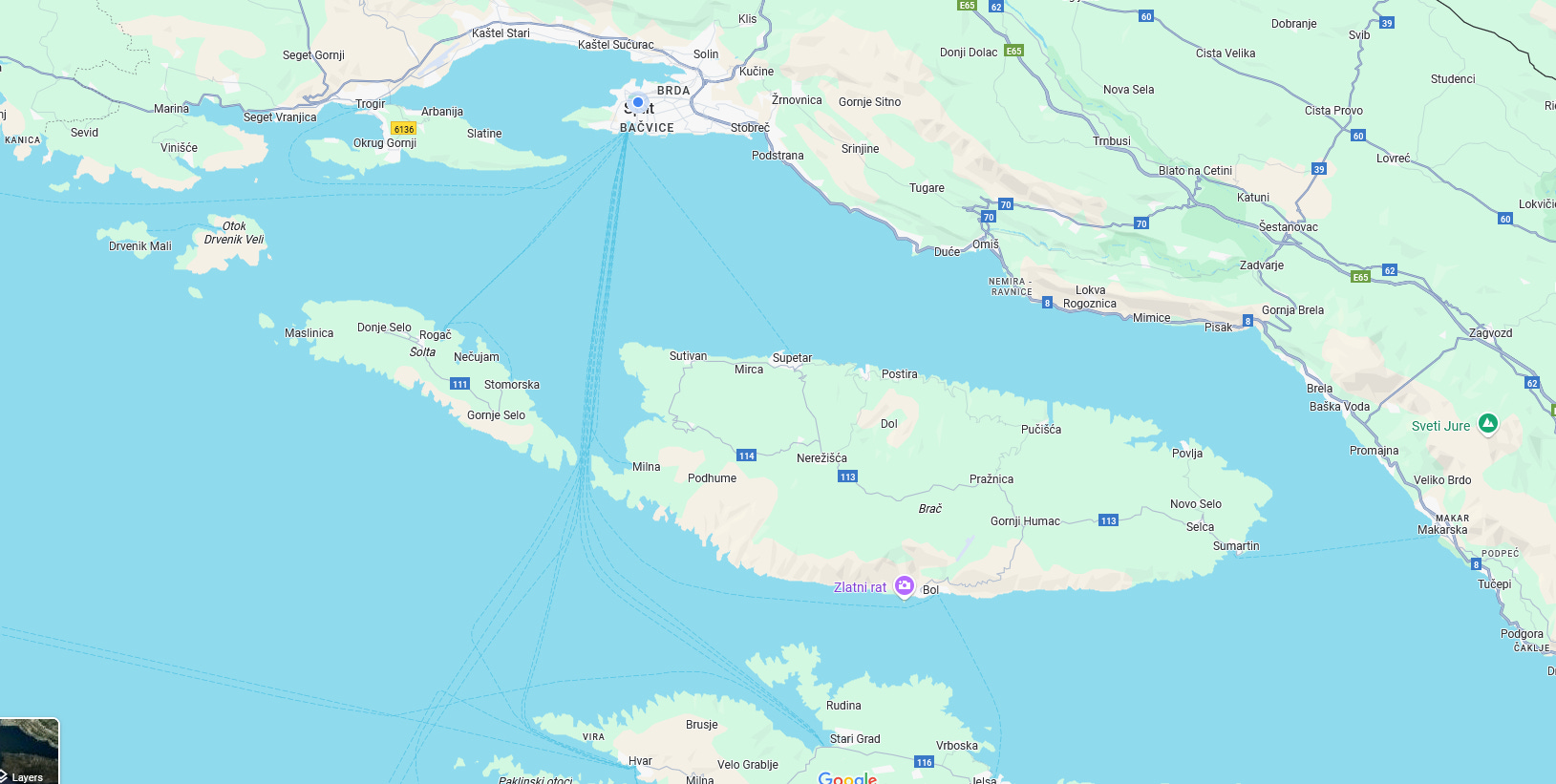
It’s a beautiful island off of the coast near Split, the city in which I reside. Its main industry is tourism, having long supplanted fisheries and wineries. People on the island live well, many very, very well. I go there a lot.
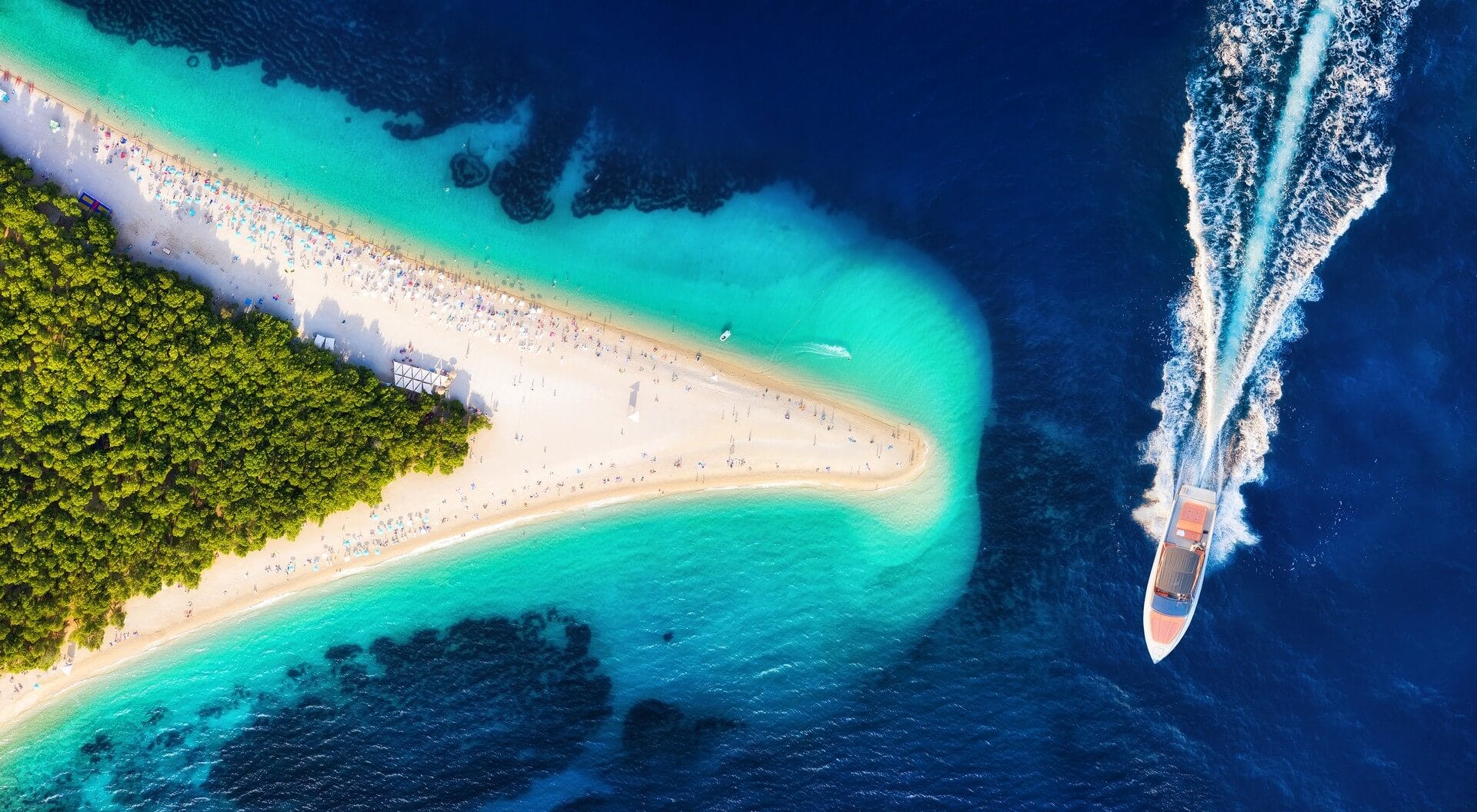
On the south side of the island you can find Zlatni Rat (Golden Cape), which is in my opinion the best beach in the entire Adriatic. It’s fine pebble, which means that you can run around in it as the pebbles are rounded down and very small and smooth. It also means that you don’t get dirty as there is no sand. The beach lies in the canal between the islands of Brac and neighbouring Hvar, and the current cools the water temperature by 1-2C in the peak of summer, meaning that it is always refreshing.
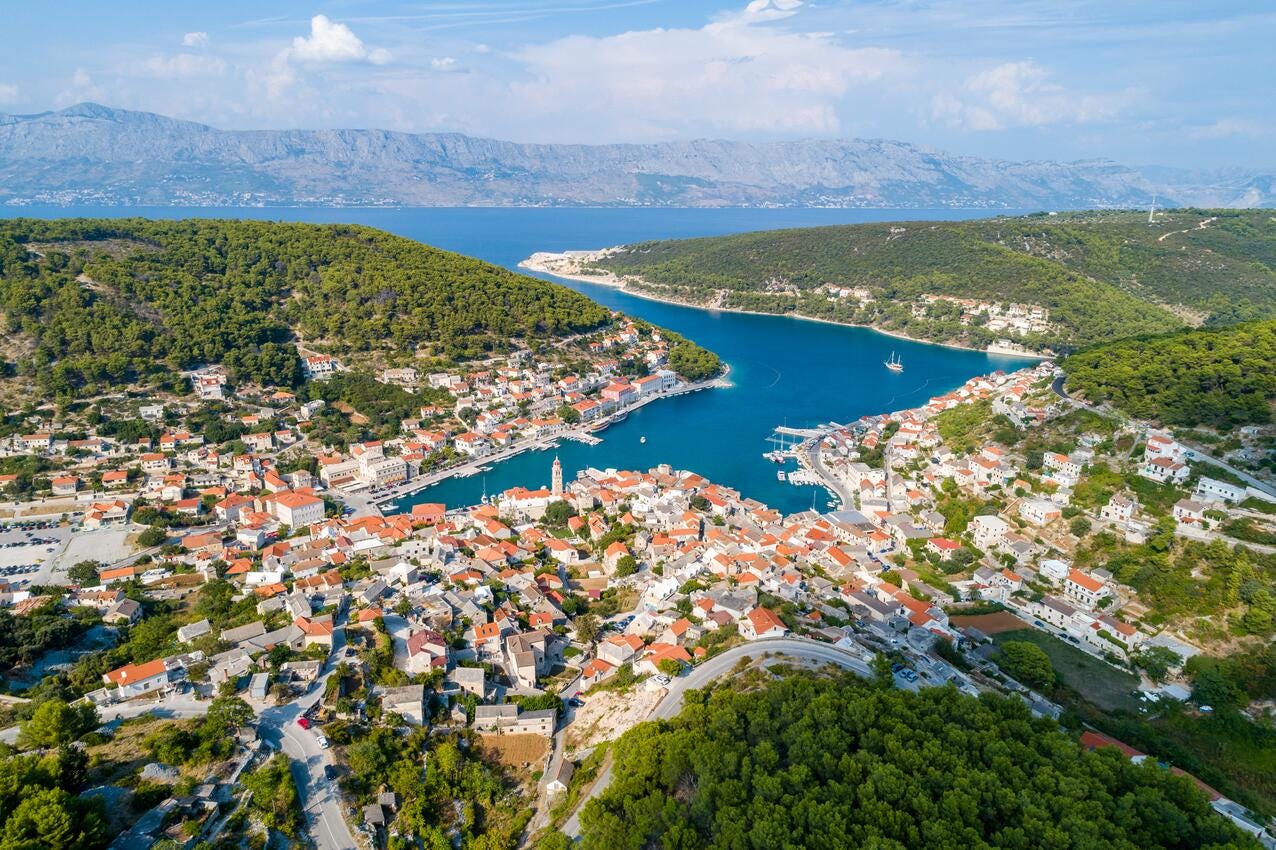
The pace of life on the island is slow, something that people appreciate more and more these days. Being Dalmatian islanders, the residents of Brac are known for their friendliness and openness (except when it comes to their wallets), and the food that they serve is excellent.
Note: Time for a history lesson. Please forgive me.
When it comes to my favourite historical subjects, I have a tendency to visit, re-visit, and then continue to again re-visit several very different topics. Readers will notice this over time when it comes to my writing, one subject in particular being New York City at the turn of the previous century up until the 1930s, another being the Manson Murders (note the physical address assigned to this Substack). I dig and I dig and I dig until I exhaust my interest, only to return to it in a year or two.
As I get older, I appreciate local histories more and more. I really enjoy excavating down to the village level, as that is where you meet the most colourful characters and encounter the best stories, especially when oral histories are available. When I briefly lived in Switzerland, I did this for the town of Solothurn and its surroundings. I have been doing the same for Dalmatia (and bordering regions) for quite some time as well, especially the immediate area in and around the city of Split.
“The Balkans produces more history than it can consume” is a quote misattributed to Winston Churchill, but one that has been referenced so often that it has now become a truism. The original quote was in reference to the Greek island of Crete, but because it is true for the whole of the Balkans (or Southeastern Europe, if that is your preference), it has passed into the realm of the real. Despite its laid back reputation and sunny weather and disposition, the island of Brac is no exception to this rule.
Besides noticing the very Mediterranean topography, visitors to the island will not be able to avoid noting just how Venetian the town centres look. This is due to the fact that the Venetian Empire ruled the island (and much of the Adriatic) for several centuries. Even though the Italian regions of Abruzzo, Marche, and Apulia are geographically much closer to Central Dalmatia and its islands, its Venice that has left the largest imprint to this day. Even the local dialect is full of Italian words (taken from Venetian pre-Italian standardization). Locals will say “pomedora” for tomato, or “portan” for front door. Pants are “pantalone”, and the kitchen is “kuzhina”. Over the centuries, Venetian officials and traders settled the island, which is why Italian surnames are still relatively common even if the Italians themselves are almost entirely gone.
Napoleon ended the Venetian Empire, and the Austrians took control of Dalmatia when Napoleon met his Waterloo. Even though forming between 2-4% of the population of the province (now Kingdom of Dalmatia within the Habsburg realm), Italians continued to form its political, economic and cultural elite. The Croatian language was only made official and permitted to be used in government, schools, and on signs just prior to the end of the 19th century, and only after serious political conflict between pro-Italian ‘Autonomists’ and pro-Croatian ‘Populists’. Even after this historic victory was achieved, the fear of Italian encroachment was ever-present, as local Italians and assimilated locals who defined themselves as Italians looked on the creation of the modern Italian state enthusiastically, hoping that it would one day extend to the Eastern Adriatic coast. In their view, Italian culture was superior to that of the “barbaric Slavs” (an argument not without merit, in my opinion).
These fears weren’t without cause, as Italy entered the First World War by negotiating the secret Treaty of London (1915) that saw most of Dalmatia ceded to it in the event a victory by the Triple Entente or over the Central Powers.
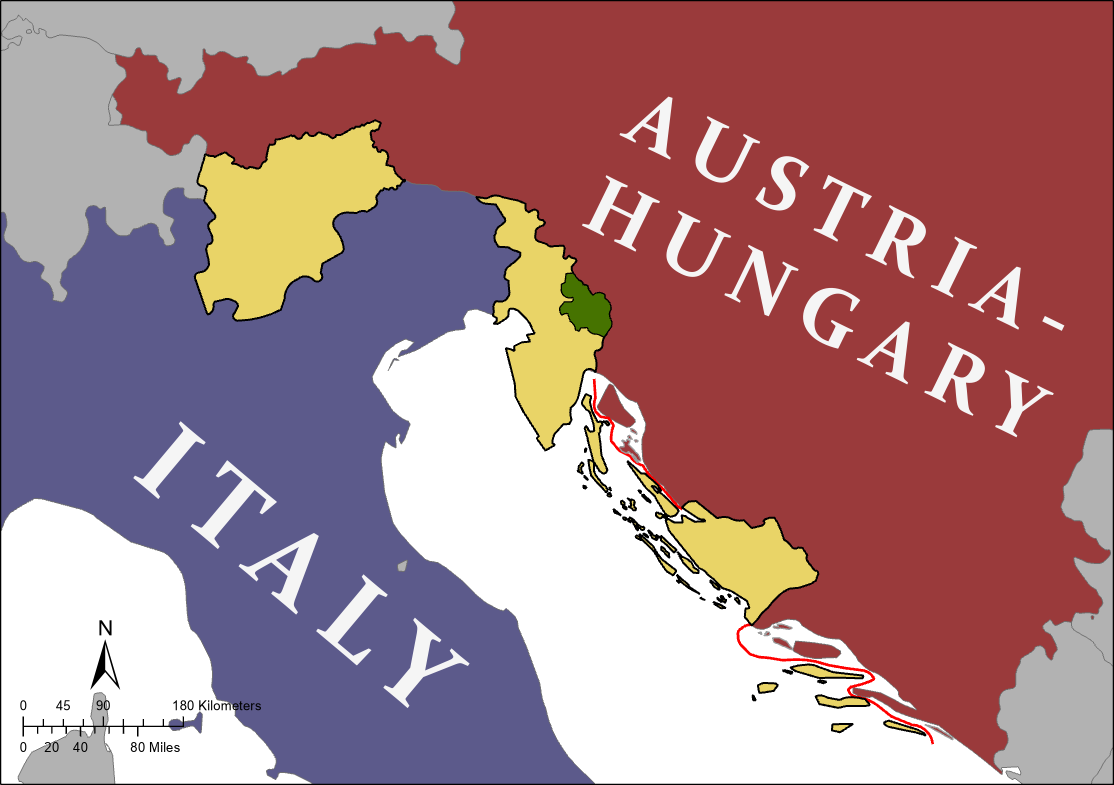
Thanks to Woodrow Wilson and his famous 14 Points, the Treaty of London was scrapped at the Paris Peace Conference (1919-20), much to the consternation of the Italians. Nevertheless, they took the opportunity of a power vacuum in Dalmatia resulting from the collapse of the Habsburg Empire to send their forces to occupy as many islands and towns on the coast as possible to create a fait accompli that the Great Powers would be forced to accept…..except the Americans refused to do just that and instead sent a naval fleet into the Adriatic to chase the Italians out from many places in Dalmatia. The arrival of the Americans was greatly cheered by locals who in many places actively fought the Italian occupation. The Italians were forced to reduce their appetite along the Eastern Adriatic coast, agreeing to a border with the newly-established Kingdom of Serbs, Croats, and Slovenes, later known as Yugoslavia. It was this American action that led Italians to describe their efforts in the First World War as a vittoria mutilata (mutilated victory), providing the initial fuel for what would become Italian Fascism.
Dalmatians lived in dread of their land being seized by the Italians and being forced to live under Italian rule. It was this fear in combination with the power vacuum in Dalmatia at the end of the First World War that led local elites to demand immediate unification with the Kingdoms of Serbia and Montenegro, seeing Yugoslavia as the only guarantee against Italian irredentism. So strong was this fear that many local elites in Dalmatia (and on the island of Brac) began to promote Yugoslavism as an identity over that of the Croatian one, with serious effects over the next few decades.
The political climate of the island of Brac (almost entirely Croatian in composition in those years, with a smattering of Italians and then an even smaller cohort of Serb officials and their families arriving beginning in the 1920s) reflected that of the rest of Dalmatia during the 1920s and 30s. The initial euphoria of the creation of the first Yugoslav state quickly dissipated, and despite certain island elites maintaining loyalty to the Serbian King, the vast majority of the island’s residents rallied around the Croatian Peasant Party (80% by the late 1930s) due to poor economic conditions, the assassinations of several Croatian political leaders by the regime, and also because of the heavy-handed dictatorship introduced in 1929. Islanders wanted investment, development, electricity, expanded markets for their products, and a rising standard of living. Fascism and communism were rejected by the overwhelming majority of the islanders who just wanted to live better lives on their island paradise.
World War 2 on Brac
The problem with wanting to be left alone is that it takes two to leave you alone: you and everyone else. Like much of the world, Brac was not permitted to be left to its own devices by World War 2. With the Axis invasion and defeat of Yugoslavia in April of 1941, the country was partitioned into several parts. Initially, the island of Brac was awarded to the newly formed Independent State of Croatia (NDH), a puppet regime of both Nazi Germany and Fascist Italy. Officials of this new regime began to wash ashore the island, but the Italians decided to rectify their mutilated victory by claiming even more land in Dalmatia. At the end of May of 1941, much of Dalmatia was handed over to Fascist Italy, rendering the pseudo-Independent State of Croatia stillborn, as its leader was forced to sign it over to Mussolini. In an instant, this new state lost much of its support.