
The Final Showdown With Tehran?
"No time like the present", Middle East Pacification, Eliminating a Regional Challenger, Israel's Immense Influence Over US Foreign Policy, Iran as Venezuela Redux, etc.

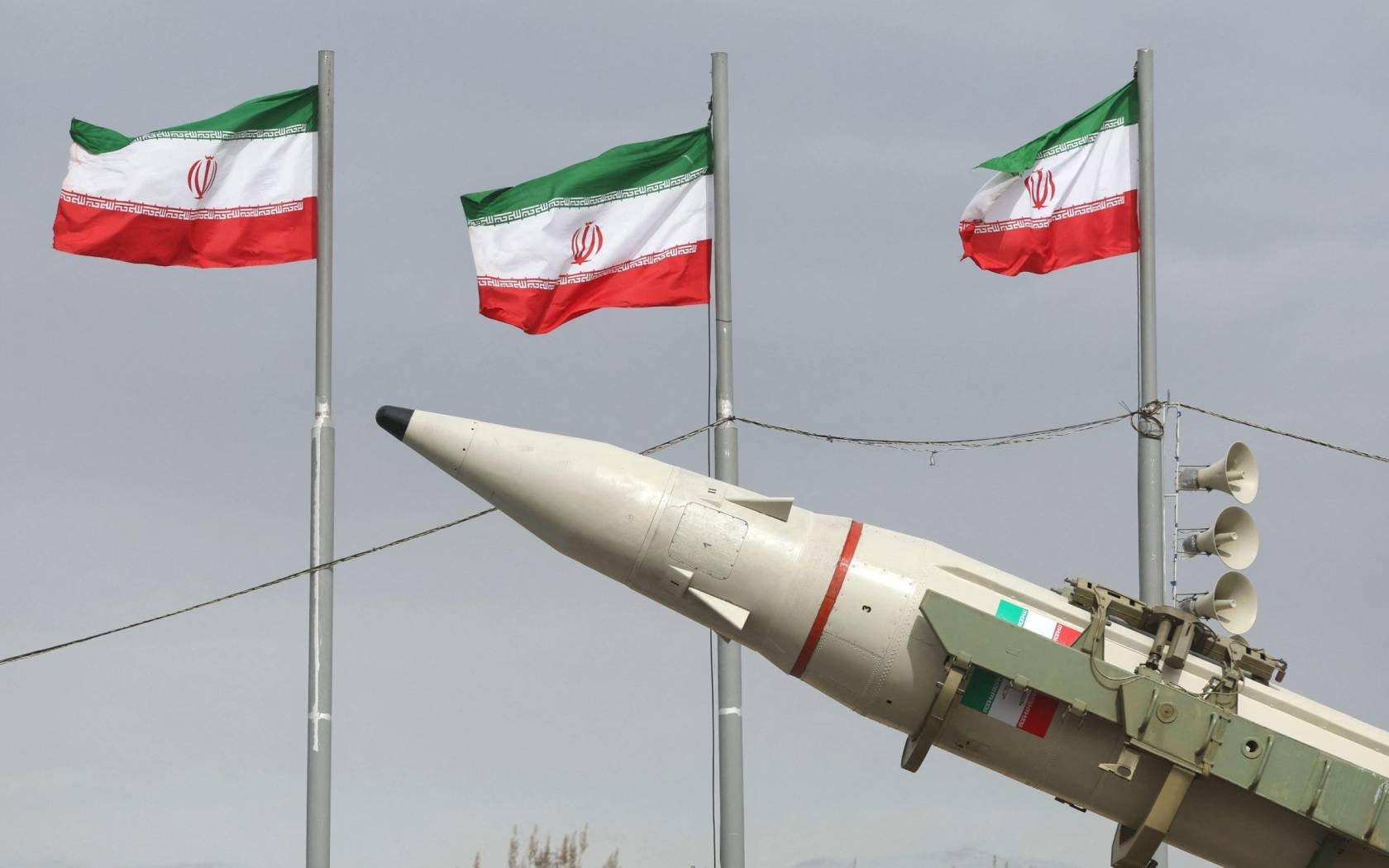
If you strip away the moral aspect, remove the domestic political considerations, and look at it objectively, this was probably the best time to conclusively hit Iran. Rocked by destabilizing anti-government protests only a year or so after seeing 40 years of its regional strategy blow up in their faces in the span of two weeks, Tehran has been increasingly isolated. Add to this the recent round of joint US-Israeli strikes targeting its nuclear power infrastructure combined with its somewhat feeble retaliatory efforts, and one could satisfactorily argue that the regime has suffered a mortal wound. Why not finish it off once for all?
This is Iran, after all. This is the country whose government chants “Death to America!” like the British once used to exclaim “God Save the King!”. This is a country that took US officials hostage, thoroughly embarrassing the Americans for well over a year, helping destroy Jimmy Carter’s Presidency. This is a country that is technically not just Islamist, but also a revolutionary regime, one whose creation inspired Muslims across the Sunni-Shi’a divide to turn back to Islam and embrace radical, revolutionary politics to upend and replace secular governments that they viewed as being weak in the face of foreign powers.
Think about it: isolated and left to twist in the wind by a Russia too preoccupied with a long and bloody existential war on its footstep, effectively abandoned by a China that is playing its own long game, Iran is ripe for the plucking. Remove yourself from all biases that you carry, and all the politics that you support, and hitting Iran now makes perfect sense. Hitler is claimed to have boasted that “We have only to kick in the door and the whole rotten structure will come crashing down.” in reference to the USSR. It wasn’t true with respect to the Soviet Union, but can it be true about Iran?
“War is the realm of chance. No other human activity gives it greater scope; no other has such incessant and varied dealings with this intruder.”
-Carl von Clausewitz
Bashar Assad is playing video games in exile in Moscow. Saddam Hussein is long dead. The USA finished the process of the Middle East’s de-Ba’athification when Damascus surrendered to al-Qaida (under a new brand) just before Christmas of 2024. Two ex-Soviet client regimes, Iraq (opportunistic) and Syria (traditional), inherited by Russia have been removed from the chessboard of the Middle East in the span of one single generation. Gone from the equation is secular Arab nationalism that is both anti-American and anti-Israeli. Two challengers to US hegemonic ambitions in that region are no more, rendering Iran, the final prize, almost completely isolated. This is an isolation made only even more stark by the loss of an Iranian ally in Damascus, and the humbling of its Lebanese client, Hezbollah. Iran remains the only state challenger to US designs on the Middle East. If the regime can be replaced, or if the present one can be altered enough to a certain degree, the American victory in the region will be final, as the Middle East would be pacified in the larger sense.
Only Iran stands in the way of the USA being able to finally subdue the whole of the Middle East. For almost half a century now, several American governments have been bogged down in a region that holds outsized importance to the global economy, even if that importance has diminished somewhat over the past decade and a half. The story contains three key elements:
maintain critical supplies of oil to the USA and most of the rest of the world in order to aid in economic growth
gain control of oil and gas supplies in order to use as leverage against state actors not aligned with US strategic goals, yet reliant on said energy supplies
support the defense (and sometimes, expansion) of Israel from its regional opponents in order to satiate various pro-Israeli domestic constituents that are politically powerful
Dwight Eisenhower sent 15,000 marines and soldiers to Lebanon in 1958 to stabilize a pro-western regime in Beirut as part of Operation Blue Bat. Ronald Reagan sent the Marines to the same country in the early 1980s, but with disastrous results. It was only with Operation Desert Shield/Operation Desert Storm that the USA entrenched its forces in the Middle East, a presence that has been continuous to this day, one that has been coloured by an immense amount of resources being allocated to it, and triggering a significant amount of criticism in response.
There have been quite a lot of side quests during the era of permanent US military presence in the Middle East, but each one of them, ranging from “fighting terrorism” to “halting Iran’s nuclear ambitions”, fall within the above three elements. For example, the official narrative regarding the 9/11 attacks on the USA states that al-Qaida was responsible for it. The leader of al-Qaida at the time, Osama bin Laden, turned to terror for many reasons, but the straw the broke the camel’s back was the permanent stationing of US forces on Saudi Arabian soil. To him and his type of Sunni Muslim, this represented a severe violation of Islam, in that a non-Muslim power was occupying the “Land of the Two Holy Mosques” (Mecca and Medina). Yet the large US presence in Saudi Arabia only came about due to its confrontation with Saddam Hussein in the lead up to the First Gulf War. Saudi Arabia, the world’s only ‘swing producer’ of oil, was so critical to the increasingly-globalized world economy (led by the USA), that Washington felt it had no option but to place troops in that very conservative Islamic country in order to protect the regime from threats, both external and internal.1 This is a classic example of how one of the three key elements stated above resulted in side quests that have become themes of the history of US forces in the Middle East.
If the Iranian regime can be toppled, and if an American client can be put in its place, the USA will have accomplished the pacification of the Middle East and its successful incorporation into the US Empire. This is just how enormous the stakes are when Donald Trump threw the dice this past weekend. Sure, minor irritants would flare up from time to time, but present ones like Hezbollah and the Houthis would lose their patrons, resulting in a significant loss of their own ability to project power. Most importantly, this desired pacification would permit the USA to finalize two stated policy objectives.